Gymnema and Blood Sugar: What the Research Actually Shows
Gymnema sylvestre has some preliminary trial support for blood sugar, but reviews call the evidence insufficient due to small, inconsistent trials. Research doses run roughly 200-800 mg a day. Combined with diabetes medicine it can cause hypoglycemia. Sugar Reset lists it inside an undisclosed 200 mg blend with no individual amount printed.
Gymnema and blood sugar: what the research actually shows
Gymnema is one of the older, more studied plants in the blood sugar supplement world, and it sits eighth in the ingredient order inside Sugar Reset's 200 mg proprietary blend. No amount is printed for it, so nothing on the label says how much gymnema is actually in a dropper.
This guide covers what gymnema is and where its traditional name comes from, what researchers have found about the quality of gymnema trials, the doses those trials used, a real safety interaction with diabetes medicines, and what all of that means when gymnema shows up inside an undisclosed blend rather than on its own label line.
What is gymnema, and where does the name come from?
Gymnema sylvestre is a woody, climbing plant native to tropical parts of India, Africa and Australia. Its leaves have a long history in Ayurvedic medicine, where practitioners traditionally used it for sugar cravings and blood sugar concerns. Its Hindi common name, gurmar, is usually translated as "sugar destroyer," a reference to how the leaf affects the taste of sweetness, covered in more detail below.
On Sugar Reset's Supplement Facts panel, it is printed as "Gymnema Leaf Extract," one of 22 names inside the single 200 mg Proprietary Blend, alongside maca, guarana, green tea and grapefruit extract among others.
What is the sugar-taste effect, and does it prove anything?
Gymnema leaves contain compounds called gymnemic acids. Chewed or held on the tongue, they can temporarily blunt the ability to taste sweetness, so sugar itself can taste flat or muted for a short while afterward. This sweet-taste effect is the most consistently reported action of the raw leaf and is the basis for its traditional "sugar destroyer" reputation.
That taste effect is a different thing from a proven blood-sugar-lowering effect in the body. A dropper of liquid extract swallowed as part of a supplement is not the same exposure as chewing a fresh leaf, and the taste-blunting effect itself does not tell you anything about what gymnema does, if anything, once it is digested. The research on that second question is covered next.
What do reviews say about the quality of gymnema trials?
The most direct look at gymnema's trial record comes from a systematic review of herbs and supplements for glycemic control published in Diabetes Care.
The review identified Gymnema sylvestre among the botanicals with positive preliminary results, reporting that it significantly improved more than half of the glycemic outcomes measured across the trials it covered. But the same review concluded there was insufficient evidence overall to draw firm conclusions about the efficacy of individual herbs and supplements, gymnema included, and called for larger, more rigorous trials.
A separate supplement safety reference reaches a similar place from the other direction: it rates all traditional uses of gymnema, including for diabetes, as having insufficient evidence to rate effectiveness one way or the other, while noting that early research on a specific standardized extract (called GS4) taken alongside insulin or diabetes medication suggested it could enhance blood sugar reduction (RxList et al., 2024).
Put together, "positive preliminary results" and "insufficient evidence" are not contradictions, they describe the same real problem: the trials that exist are small, short and inconsistent in how they measure and report results, which is exactly the kind of trial record that produces encouraging headlines and weak conclusions at the same time.
What doses have gymnema trials actually used?
Unlike chromium, gymnema does not have one standardized research dose that shows up across trials. Reviewed studies have generally used extract amounts in the range of roughly 200 mg to 800 mg a day, often as a standardized extract such as GS4, and frequently taken for weeks to months rather than as a single dose.
| Detail | What the sources say |
|---|---|
| Typical trial amount | roughly 200-800 mg/day of gymnema extract |
| Common extract type in trials | standardized extract (e.g., GS4) |
| Typical trial length | weeks to months |
| Sugar Reset's gymnema amount | Not published |
Because Sugar Reset's label gives no individual amount for gymnema, there is no way to check its dropper against that 200-800 mg research range, or against any specific extract standard. The label simply does not contain the information needed to make that comparison.
What is the hypoglycemia risk with diabetes medicines?
The most important thing to know about gymnema is not its trial record, it is how it behaves alongside diabetes medicine. Gymnema is thought to work through some of the same blood-sugar-lowering pathways that insulin and other glucose-lowering drugs use, which raises a real risk when the two are combined.
Clinical trial reports document patients taking gymnema alongside antidiabetic drugs developing secondary hypoglycemic symptoms, with some needing their diabetes medication dose reduced or discontinued entirely; in one trial, 23% of participants discontinued their conventional drug therapy. The assessment concluded that combining gymnema with, or substituting it for, authorized antidiabetic drugs may carry risks when used without medical supervision, and that uncertainty in product composition and dosing prevented setting a safe intake level.
A supplement safety reference rates the interaction between gymnema and insulin or diabetes medications as "Moderate," warning that combining them might push blood sugar too low and recommending close monitoring with possible medication adjustment. The same reference advises stopping gymnema at least 2 weeks before surgery and avoiding it in pregnancy or breastfeeding, due to insufficient safety data (RxList et al., 2024).
In plain terms: anyone on insulin, metformin, a sulfonylurea or any other glucose-lowering medicine should talk to a clinician before adding a gymnema-containing product, and should never stop or reduce a prescribed medicine on their own because a supplement seems to be working. See the full caution list on the side effects page.
What does gymnema mean inside an undisclosed blend?
Here is where the research and the label meet. Gymnema is a real, moderately studied plant with a genuine, documented safety interaction. But on Sugar Reset's Supplement Facts panel, it is one name among 22 sharing a single 200 mg total, with no individual amount printed for any of them.
That matters in two directions. First, there is no way to know whether the gymnema dose in one dropper is anywhere close to the 200-800 mg research range, or a tiny fraction of it, the way chromium is a tiny fraction of its own research range (see our chromium article). Second, and more important for safety, an undisclosed amount does not cancel the interaction risk: even a small, unknown dose of gymnema, especially combined with chromium in the same blend, is still a plant ingredient with a known blood-sugar-lowering mechanism, and it still deserves a conversation with a clinician if you take glucose-lowering medicine.
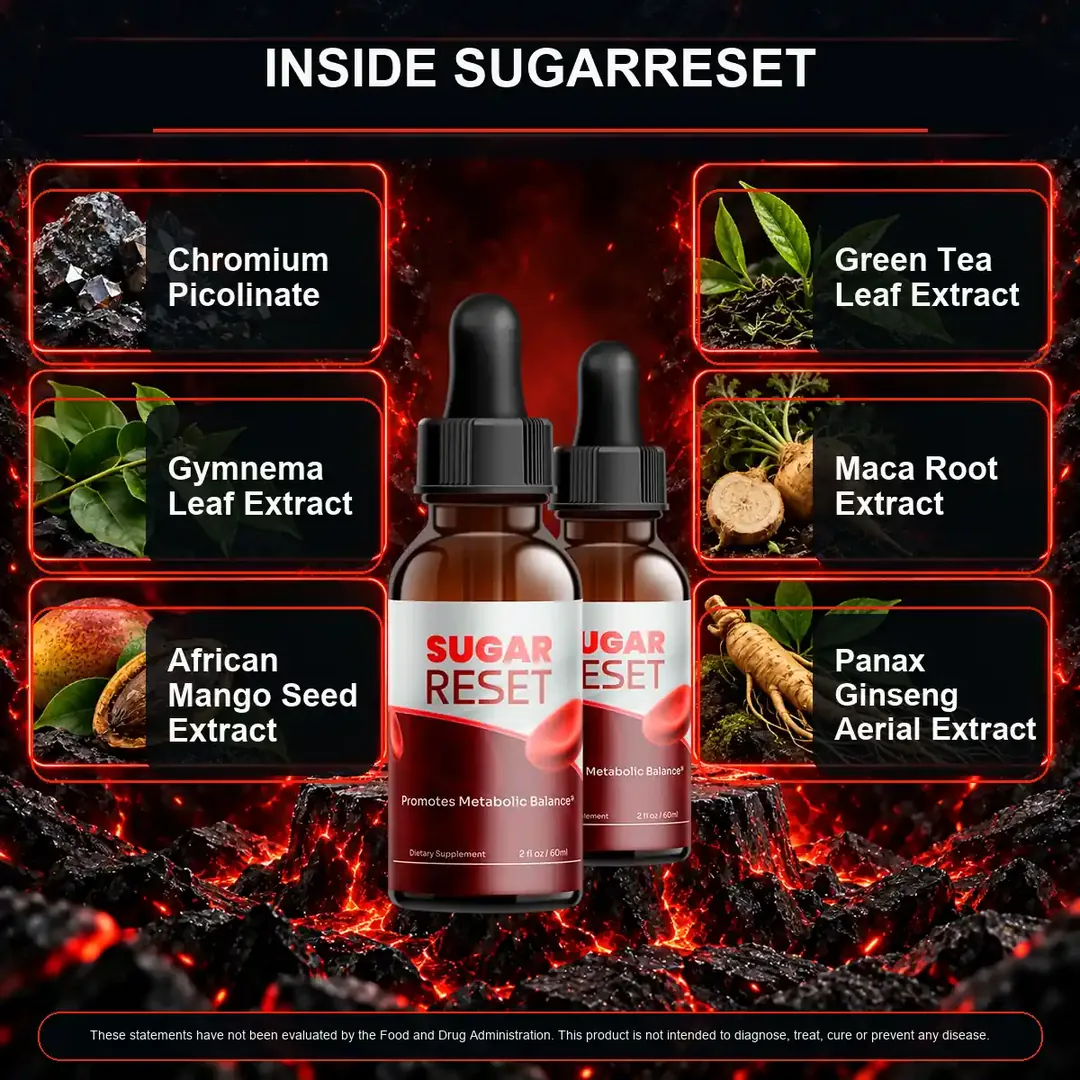
The sales page names gymnema as one of six highlighted ingredients, but the label lists it eighth among 22 blend ingredients, in the descending-weight order used on US labels. Our article on proprietary blends explains what that order means and why the individual amounts are not required to be disclosed. For the rest of the label, see the Sugar Reset ingredients page.
So what should you take away from this?
Gymnema has a longer, more encouraging research trail than many blend ingredients, and a real, documented reason for caution: it can add to the blood-sugar-lowering effect of diabetes medicine. Both of those things are true at once, and neither one depends on knowing the exact dose.
What is missing is the dose itself. Sugar Reset's label does not say how much gymnema is in a dropper, so no comparison to the 200-800 mg research range is possible, and no one, including us, can say what effect, if any, this specific amount could have.
If you take insulin, metformin or any other glucose-lowering medicine, treat that gap as a reason to talk to a clinician first, not as a reason to assume the amount is too small to matter. See the Supplement Facts breakdown for the full label, or use our checklist for choosing a blood sugar supplement before you buy.
Questions readers ask
What is gymnema used for?
Gymnema sylvestre leaf is traditionally used in Ayurvedic medicine for sugar cravings and blood sugar concerns, and has been studied in modern trials for glycemic control.
Why is gymnema called the sugar destroyer?
Its Hindi name, gurmar, reflects gymnemic acids in the leaf that can temporarily blunt the tongue's ability to taste sweetness.
Does gymnema actually lower blood sugar?
A systematic review found gymnema among herbs with positive preliminary results, but concluded the overall evidence was insufficient to draw firm conclusions (Yeh et al., 2003).
What dose of gymnema is used in research?
Reviewed trials generally used roughly 200 to 800 mg a day of gymnema extract, often a standardized form, over weeks to months.
Can gymnema cause low blood sugar with diabetes medicine?
Yes. An EFSA risk assessment documents cases of hypoglycemia when gymnema was combined with antidiabetic drugs, with some patients needing their medication dose reduced (Marakis et al., 2018).
Is gymnema safe to take with insulin or metformin?
Only with medical supervision. A supplement safety reference rates the interaction as Moderate and recommends close blood sugar monitoring (RxList et al., 2024).
How much gymnema is in Sugar Reset?
The label does not say. Gymnema Leaf Extract is one of 22 ingredients inside a single 200 mg proprietary blend with no individual amounts printed.
Should I stop my diabetes medicine if a supplement contains gymnema?
No. Never stop or change prescribed medicine on your own. Talk to a clinician first, especially since gymnema and chromium together can compound the risk of hypoglycemia.
Keep reading
Chromium and blood sugar
What chromium is, its food sources, the adequate intake, what 200-1,000 mcg trials found, who might be low, and why 0.7 ...
Read →Proprietary blends and blood sugar
What a proprietary blend is, why US labels allow it, descending-weight order, the math of 200 mg across 22 ingredients, ...
Read →How much does Sugar Reset cost?
Pack sizes, days of supply and how to pick the right one.
Read →Order Sugar Reset from the authorized retailer
One bottle holds 60 one-millilitre servings. Two, three and six-bottle kits cost $79, $69 and $49 a bottle, and each comes with the same 60-day money-back guarantee. Questions before you order? The FAQ covers the common ones.