How Does Sugar Reset Work? Chromium, Gymnema and the Blend
Sugar Reset is built around two ideas: chromium for carbohydrate handling and gymnema for blood sugar support.
Chromium is printed at 0.7 mcg, and gymnema sits inside a 200 mg blend of 22 ingredients. Both are studied over weeks of daily use, not a single dropper.
How is Sugar Reset meant to work, in one picture?
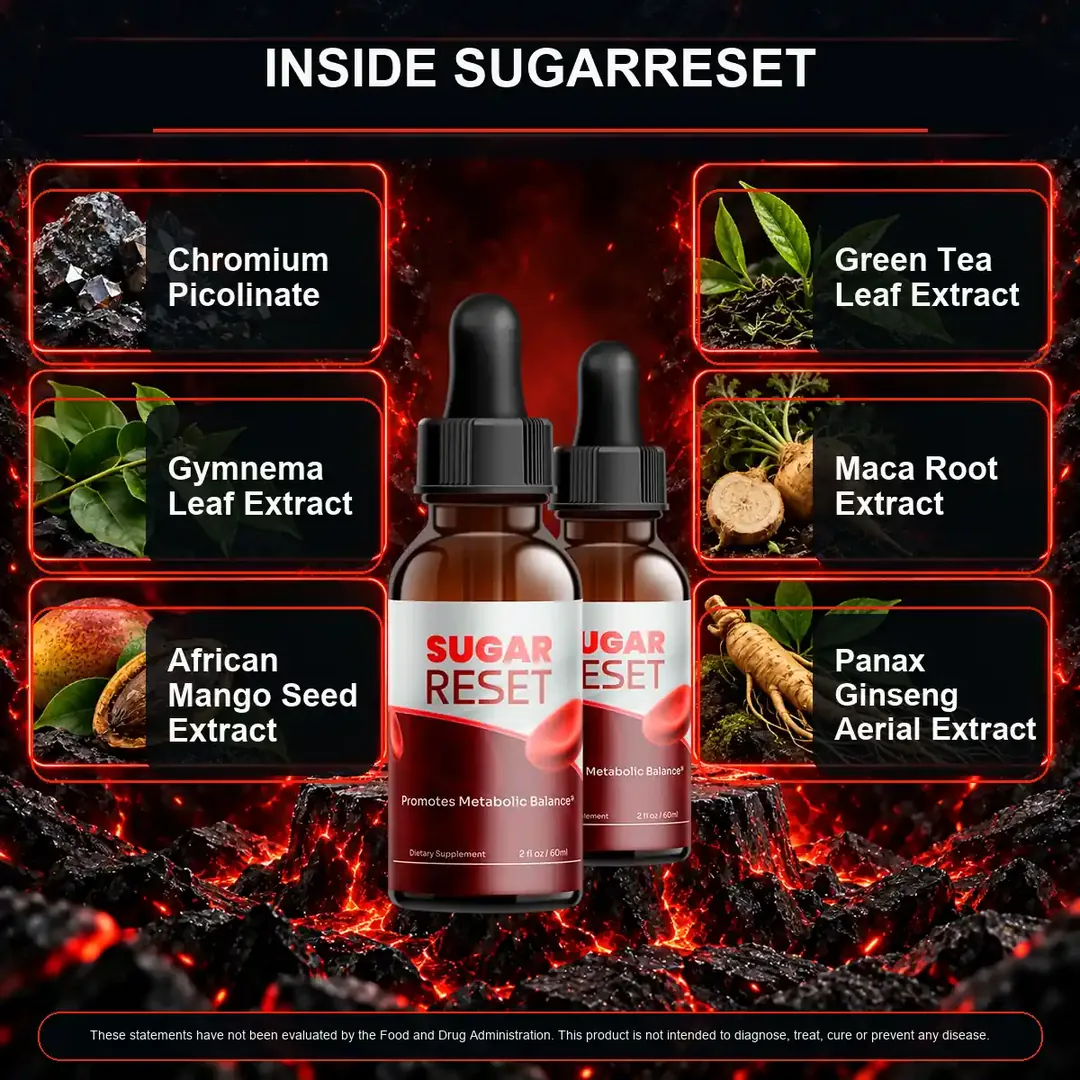
Sugar Reset's label splits into one mineral with a printed amount and a 200 mg blend of 22 plants and amino acids with none. Of the 22, gymnema is the one most directly studied for blood sugar. Chromium sits outside the blend, on its own printed line.
Neither ingredient acts in minutes. Chromium research measures fasting glucose and HbA1c over weeks of daily use. Gymnema's studied mechanism also plays out over the course of regular use, not a single dropper.
How is chromium meant to act?
Chromium is a trace mineral involved in how the body responds to insulin and processes carbohydrate. NIH's Office of Dietary Supplements sets an Adequate Intake, not an RDA, of 25 to 35 mcg a day for adults, and did not set an upper limit because no clear harm has been tied to typical intake (National Institutes of Health, 2024). The trials that tested chromium specifically for blood sugar control used far more than that everyday amount: commonly 200 to 1,000 mcg a day.
Sugar Reset's chromium picolinate is printed at 0.7 mcg, 2% of the Daily Value. That is below even the 25 to 35 mcg adequate intake for a healthy adult, and hundreds of times below the amounts used in the chromium and blood sugar trials.
What do the chromium reviews say?
A 2016 review of 20 randomized controlled trials found chromium supplements have limited effectiveness for glycemic control in type 2 diabetes, with only a small fraction of trials showing a clinically meaningful change in fasting glucose or HbA1c, and concluded there was insufficient justification to recommend chromium for this purpose (Costello et al., 2016). An earlier meta-analysis found chromium had no benefit on glucose or insulin in people without diabetes, and insufficient evidence to judge its effect in people with type 2 diabetes; one non-Western trial found a benefit, but only at 1,000 mcg a day (Althuis et al., 2002).
Both reviews looked at doses far above what this label prints. Neither found chromium to be a reliable, on-its-own fix for blood sugar, even at those higher amounts.
How is gymnema meant to act?
Gymnema sylvestre is a leaf long used in Ayurvedic medicine for sugar cravings and blood sugar. Safety reviewers describe it as working through the same blood-sugar-lowering mechanism as diabetes medications, which is exactly why combining it with those medications needs care, covered below (Marakis et al., 2018).
Reviewed trials of gymnema for glycemic control used varying amounts, often a standardized extract taken alongside diabetes medication, not a single agreed dose. Sugar Reset's label gives gymnema no amount at all: it is one of 22 names sharing the 200 mg blend.
What do the gymnema reviews say?
A 2003 systematic review of herbs and supplements for diabetes found gymnema among the botanicals with positive preliminary results, improving more than half of the glycemic outcomes measured across the trials it covered, but concluded there was insufficient evidence overall to draw firm conclusions, and called for larger, more rigorous trials (Yeh et al., 2003). RxList rates all traditional uses of gymnema, including for diabetes, as having insufficient evidence to rate effectiveness, though it notes early research on a specific extract taken alongside insulin or diabetes medication (RxList et al., 2024).
Promising and unproven are not the same thing. Full safety detail on combining gymnema with glucose-lowering medicine: Sugar Reset side effects.
Label amount vs. research dose, charted
A log-scale view of the same gap: what this label prints, next to the range research has actually tested.
Amount on this labelRange used in research
- Chromium0.7 mcg on the label0.7 mcgstudies: 200 mcg to 1 mg
- Gymnema leaf extractamount not publishednot publishedstudies: 200 mg to 800 mg
- Green tea leaf extractamount not publishednot publishedstudies: 100 mg to 800 mg
- African mango seed extractamount not publishednot publishedstudies: 150 mg to 300 mg
- Maca root extractamount not publishednot publishedstudies: 1,500 mg to 3,500 mg
- Panax ginseng extractamount not publishednot publishedstudies: 600 mg to 3,000 mg
Log scale: each step is 100 times the last. Where the label prints no amount, only the research range is shown.
Chromium is the only one of the six with a printed dot on this chart. The rest sit inside one blend, so only the research range can be shown for them.
Why can't a 200 mg blend of 22 carry study doses?
Here is the arithmetic behind why a 200 mg blend of 22 ingredients cannot carry the doses those two mechanisms need.
| Step | The math |
|---|---|
| Total blend weight | 200 mg, shared by 22 ingredients |
| Average share, split evenly | 9 mg per ingredient |
| Gymnema trials reviewed | commonly 200 mg or more a day of a standardized extract |
| Maca trials reviewed | 1.5 to 3.5 g (1,500 to 3,500 mg) a day |
| Panax ginseng trials reviewed | roughly 600 mg to 3 g a day |
| Chromium trials reviewed | 200 to 1,000 mcg a day, versus 0.7 mcg on this label |
Even if gymnema were the single largest share of the 200 mg blend, and it is not listed first, it could not reach 200 mg on its own inside a 200 mg total that also holds 21 other ingredients. Maca and ginseng research doses are measured in grams, not milligrams. A blend this size, split this many ways, cannot plausibly deliver research-level amounts of more than one or two ingredients, and the label does not say which, if any, that might be.
Full ingredient-by-ingredient detail: Sugar Reset ingredients.
So how does Sugar Reset actually work?
Put the two mechanisms and the blend math side by side and an honest picture appears.
- What has research: chromium and gymnema are the two ingredients here with a studied link to blood sugar
- What the research found: reviews call both effects limited, inconsistent or preliminary, not settled
- What the label allows: 0.7 mcg of chromium, and an unknown, almost certainly small, share of gymnema inside a 200 mg blend of 22
None of this is a promise that Sugar Reset works or fails. It is what the printed amounts and the published research, read together, actually support (National Center for Complementary and Integrative Health (NCCIH), 2024). No dietary supplement is approved to treat, cure or prevent diabetes or prediabetes, and Sugar Reset does not replace prescribed medicine or testing.
What this mechanism does not tell us
No published trial has tested the finished Sugar Reset formula. Every finding above comes from research on one ingredient at a time, at doses this label does not disclose reaching. We do not know how much gymnema, green tea, African mango, maca or Panax ginseng one dropper actually delivers, or whether the 22 ingredients interact with each other in the body. The front label makes no efficacy claim beyond "Promotes Metabolic Balance"; any blood sugar wording comes from the sales page.
If you monitor glucose or take glucose-lowering medicine, keep your normal routine and talk to your clinician before adding this or any supplement. More: Sugar Reset side effects.
How It Works: common questions
How does Sugar Reset work?
It points to two studied mechanisms: chromium, involved in carbohydrate metabolism, and gymnema, an Ayurvedic leaf studied for blood sugar. Reviews call both effects limited, and the label's printed and blend amounts fall far short of research doses.
Does chromium lower blood sugar?
Reviews are mixed. A 2016 review of 20 trials found limited effectiveness, and this label's 0.7 mcg is hundreds of times below the 200 to 1,000 mcg used in those trials.
Does gymnema lower blood sugar?
A 2003 review found gymnema among herbs with positive preliminary results, but concluded evidence was insufficient overall. Its amount on this label is not published.
Why can't a 200 mg blend deliver a research dose?
Split evenly across 22 ingredients, 200 mg averages about 9 mg each, far below the 200 mg or more used in gymnema trials or the gram-level doses used in maca and ginseng trials.
Is Sugar Reset proven to work?
No. No published trial has tested the finished formula. The mechanisms above come from research on individual ingredients, mostly at doses this label does not show reaching.
Can I take Sugar Reset with diabetes medicine?
Ask your clinician first. Gymnema and chromium may lower blood sugar, and combining that effect with glucose-lowering medicine can cause hypoglycemia.
Does the label claim a blood sugar effect?
No. The front label claims only "Promotes Metabolic Balance." The blood sugar wording is on the sales page, not the Supplement Facts panel.
Should I stop testing my blood sugar if I take Sugar Reset?
No. Keep testing on your normal schedule and never stop or change prescribed medicine because of a supplement.
Keep reading
Sugar Reset ingredients, all 22 plus chromium
What each of the 22 blend ingredients is commonly used for.
Read →What are the benefits of Sugar Reset?
The label's one claim and the sales page's five statements, checked against this same research.
Read →Sugar Reset side effects and interactions
What each mechanism here means for safety, including hypoglycemia risk.
Read →Order Sugar Reset from the authorized retailer
One bottle holds 60 one-millilitre servings. Two, three and six-bottle kits cost $79, $69 and $49 a bottle, and each comes with the same 60-day money-back guarantee. Questions before you order? The FAQ covers the common ones.