Blood Sugar Test Words: A1C vs Fasting Glucose vs Post-Meal Readings Explained A to Z
Blood sugar is a snapshot of glucose in your blood right now. A1C is a lab test that estimates your average over about two to three months. Fasting and post-meal readings are two kinds of snapshot. Your doctor sets your targets. A supplement such as Sugar Reset is not a test and not a treatment.
Reading labels as well as lab words? The order button opens the official sales page, where the price and the 60-day guarantee are printed.
See today's price and guaranteeWe earn a commission when an order is placed through our order buttons.
Why do blood sugar test words confuse so many people?
Because the same few words are used for very different things. One means a single reading. Another means a three-month average. A third means a lab draw after you skip breakfast. Add the words used on supplement pages and the mix gets worse.
This page sorts them out. It is general background taken from the blood sugar basics guide on this site, not a diagnosis. Your own target range for any number depends on your health history, your medicines and whether you have diabetes or prediabetes. Only a clinician can set it.
| Word | What it is | How long it covers | How you get it |
|---|---|---|---|
| Blood sugar reading | Glucose in your blood at one moment | A snapshot | Finger-stick meter or continuous monitor |
| Fasting reading | A snapshot taken before eating | A snapshot | Meter in the morning, or a lab draw |
| Post-meal reading | A snapshot taken after eating | A snapshot | Meter or continuous monitor |
| A1C | A blood test that estimates your average | About the past two to three months | A lab test |
What do the common words mean, from A to Z?
- A1C. A lab blood test. It estimates your average blood sugar over roughly two to three months. It works because glucose sticks to red blood cells, and those cells live about that long.
- Alcohol. It can raise blood sugar soon after a drink and then push it down for hours, even overnight. The delayed drop matters most for anyone on insulin or another glucose-lowering medicine.
- Blood sugar. The glucose carried in your bloodstream at a given moment. It rises after you eat and falls between meals and overnight.
- Carbohydrate. Starches and sugars in food. They break down into glucose faster than protein or fat do.
- Continuous monitor. A sensor-based device that takes glucose readings. Each reading is still a snapshot of that moment.
- Fasting. A reading taken before you eat. It shows where you stand when food is not the main driver.
- Fibre. The part of plant food that slows how fast the stomach empties and how fast sugar reaches the blood.
- Finger-stick. A small drop of blood read by a handheld meter. It is a snapshot.
- Glucose. The sugar in your blood. The lab word for what most people call blood sugar.
- High. A reading far above your usual range, often with unusual thirst, frequent urination, blurred vision or tiredness that will not lift.
- Insulin. A hormone that moves sugar from the blood into cells.
- Low. A reading far below your usual range, often with shaking, sweating, confusion, sudden hunger or a racing heart.
- Target range. The band your clinician wants your readings to sit in. It is personal, so a general article cannot set it.
Is A1C the same as a blood sugar reading?
No. A reading is a photograph. A1C is a long exposure. The photograph can look very different an hour later. The long exposure changes slowly.
That is why a clinician may ask for both. A meter shows how food, a walk or a stressful morning moved your number today. An A1C result shows the pattern behind many days. Neither one tells you what a supplement did, because many other things changed in those weeks too.
If you monitor at home, write down what you ate and when you tested. A number on its own says little. A number with a note beside it says a lot more.
What does blood sugar reset mean, and does blood sugar reset every day?
“Reset” is a popular word, not a medical one. Search for it and you will find diet plans, methods, cleanses and product names, all using the same word for different ideas.
What does happen every day is simpler. Blood sugar rises after you eat, especially after carbohydrate-heavy food, and falls between meals and overnight as your body uses glucose for fuel. That up-and-down rhythm is normal. There is no switch that resets it, and a supplement is not that switch.
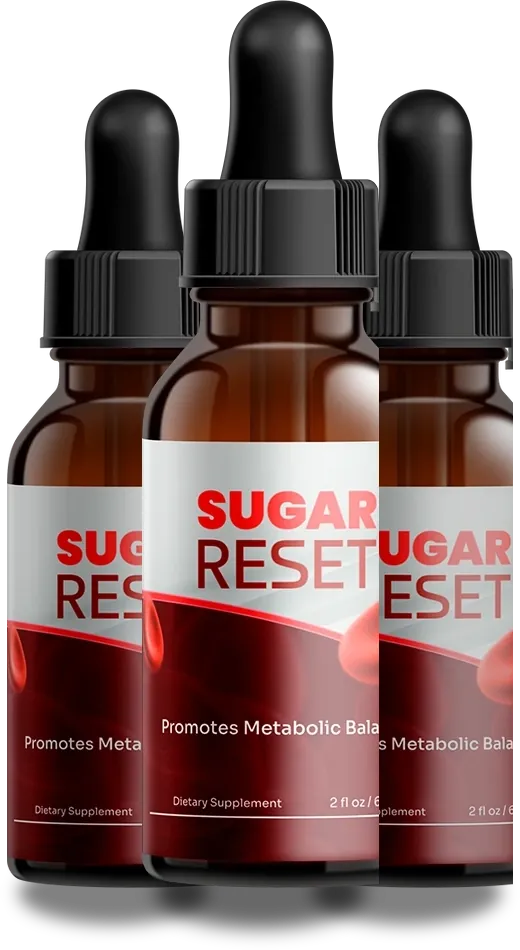
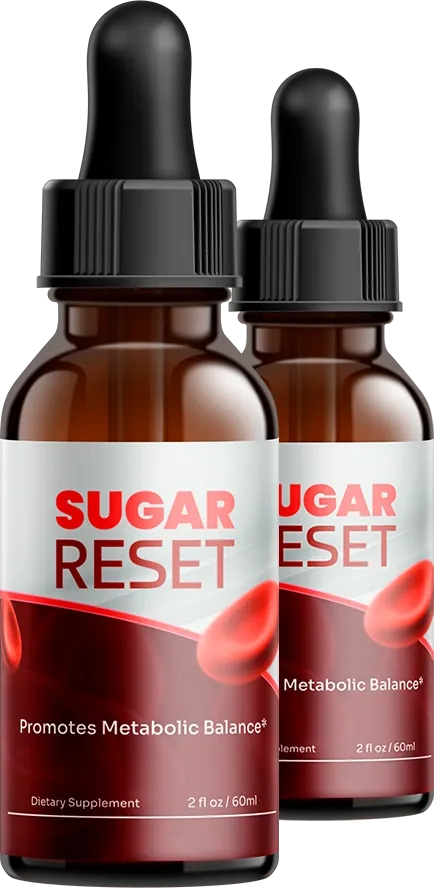
Sugar Reset is the name of a product. It is a dietary supplement in liquid drops. Its front label says only Promotes Metabolic Balance. It does not claim to reset anything, and it makes no promise about a test number.
What moves a reading up or down in a normal day?
A short list covers most of it. This is general knowledge, not a single study, and your own log will teach you more than any list.
| Driver | Direction | Why |
|---|---|---|
| Carbohydrate-heavy food | Up | Starches and sugars turn into glucose quickly |
| A large meal | Up | More carbohydrate arrives at once |
| Stress | Up | Stress hormones can push the liver to release stored glucose |
| Illness or infection | Up | The body releases hormones to fight illness |
| Poor sleep | Up | A short night can make the body less responsive to insulin next day |
| A short walk after eating | Down | Working muscle uses glucose directly |
| Vegetables, protein and fibre before starch | Smaller rise | Fibre slows how fast sugar reaches the blood |
Some medicines, such as steroids, can also raise blood sugar. Tell your doctor about everything you take.
What do healthy blood sugar and blood sugar support add to the picture?
“Healthy blood sugar” has no number attached on a supplement page. It is a mood word. The only person who can say what healthy means for you is a clinician who knows your readings and your medicines.
“Blood sugar support” is a claim style. It says an ingredient may help a normal body process. For most supplements studied for diabetes, the National Center for Complementary and Integrative Health says research has been too limited in number, size and quality to prove that they work. It adds that a few ingredients show some limited supportive evidence for fasting glucose or A1C.
The same source warns against replacing treatment with an unproven product. That sentence belongs next to every supplement page, ours included.
When does a reading need a clinician?
A reading far outside your usual range needs a call to a clinician. So does any reading that comes with chest pain, trouble breathing, fainting, confusion or a racing heart.
- Signs of a low: shaking, sweating, confusion, sudden hunger, a racing heart.
- Signs of a high: unusual thirst, frequent urination, blurred vision, tiredness that will not lift.
- No target numbers yet: a routine check with a doctor is the way to learn where you stand.
If your clinician already gave you a plan for what to do outside your range, follow that plan. A general article, a food change or a supplement does not replace it.
Where does Sugar Reset fit among all these words?
At the edge. Food, movement, sleep, alcohol habits and any prescribed medicine do the heavy lifting in the basics guide. A supplement sits beside them.
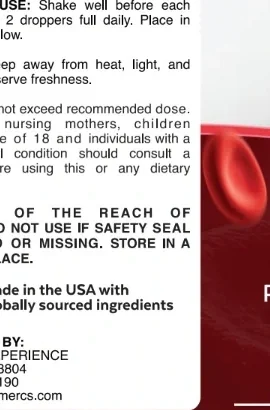
Sugar Reset's label prints chromium at 0.7 mcg and a 200 mg blend of 22 names with no single amount. The chromium line sits below the NIH Adequate Intake of 25 to 35 mcg a day. Because gymnema and chromium may lower blood sugar, anyone on insulin, metformin, a sulfonylurea or another glucose-lowering medicine should talk to the prescriber first. Keep testing on your usual schedule, and never stop or change a prescribed medicine on your own.
What are the key facts?
- Blood sugar is a snapshot of glucose right now. A1C estimates your average over about two to three months.
- Fasting and post-meal readings are two kinds of snapshot.
- Blood sugar rises after meals and falls between meals and overnight. Nothing on this page resets it.
- Your clinician sets your target range. A general page cannot.
- NCCIH says research on most supplements studied for diabetes is too limited to prove they work.
- Sugar Reset is a dietary supplement. It is not FDA approved, and it is not a test or a treatment.
- Keep testing on your usual schedule if a clinician told you to, and call a clinician for readings far outside your range.
What are the test-word and label facts at a glance?
| Item | What the source says |
|---|---|
| Blood sugar reading | A snapshot of glucose in the blood at one moment |
| A1C | A lab test estimating the average over roughly two to three months |
| Who sets your target | A clinician who knows your history and medicines |
| Sugar Reset form | Liquid drops, 2 fl oz (60 ml), 60 servings of 1 ml |
| Chromium on the label | 0.7 mcg (2% of the Daily Value) |
| NIH Adequate Intake for chromium | 25 to 35 mcg a day for adults |
| Front label claim | Promotes Metabolic Balance |
| Guarantee | 60 days from the purchase date; buyer pays return shipping |
Frequently asked questions
What is the difference between blood sugar and A1C?
Blood sugar is a snapshot of glucose at one moment. A1C is a lab test that estimates your average over roughly the past two to three months.
What is a fasting blood sugar reading?
It is a reading taken before you eat, so food is not the main driver. Your clinician decides what range is right for you.
What is blood sugar reset?
Reset is a popular word, not a medical term. Diet plans, methods and products all use it differently. Sugar Reset is a product name for a dietary supplement.
Does blood sugar reset every day?
It rises after meals and falls between meals and overnight. That daily rhythm is normal, and no supplement switches it off or on.
Can a supplement change my A1C?
Sugar Reset makes no such promise. Research on most supplements for diabetes is limited, and nobody should replace treatment with one.
When should I call a clinician about a reading?
Call for a reading far outside your usual range, or one that comes with confusion, chest pain, trouble breathing or fainting.
Our view
Most of the confusion around blood sugar comes from words that sound alike. Once you know which ones mean a snapshot and which one means an average, a lot of sales copy loses its power.
Our view is plain. Learn the words, keep a log, and let your clinician set the targets. A supplement can sit beside that routine if your doctor agrees. It cannot stand in for it, and it cannot be read as a test result.
Last updated
Read what the bottle actually prints
The official page shows the kit prices and the guarantee. If you take medicine for blood sugar, ask your prescriber before any supplement.
Disclosure: we earn a commission when an order is placed through our order buttons. Sugar Reset is a dietary supplement, not a treatment for any disease.